LUCAS
RIVERO IRIBARNE.
Hi There! I am an agricultural engineer and Geospatial Data Scientist currently working as Data engineer at Bunge.
About Me
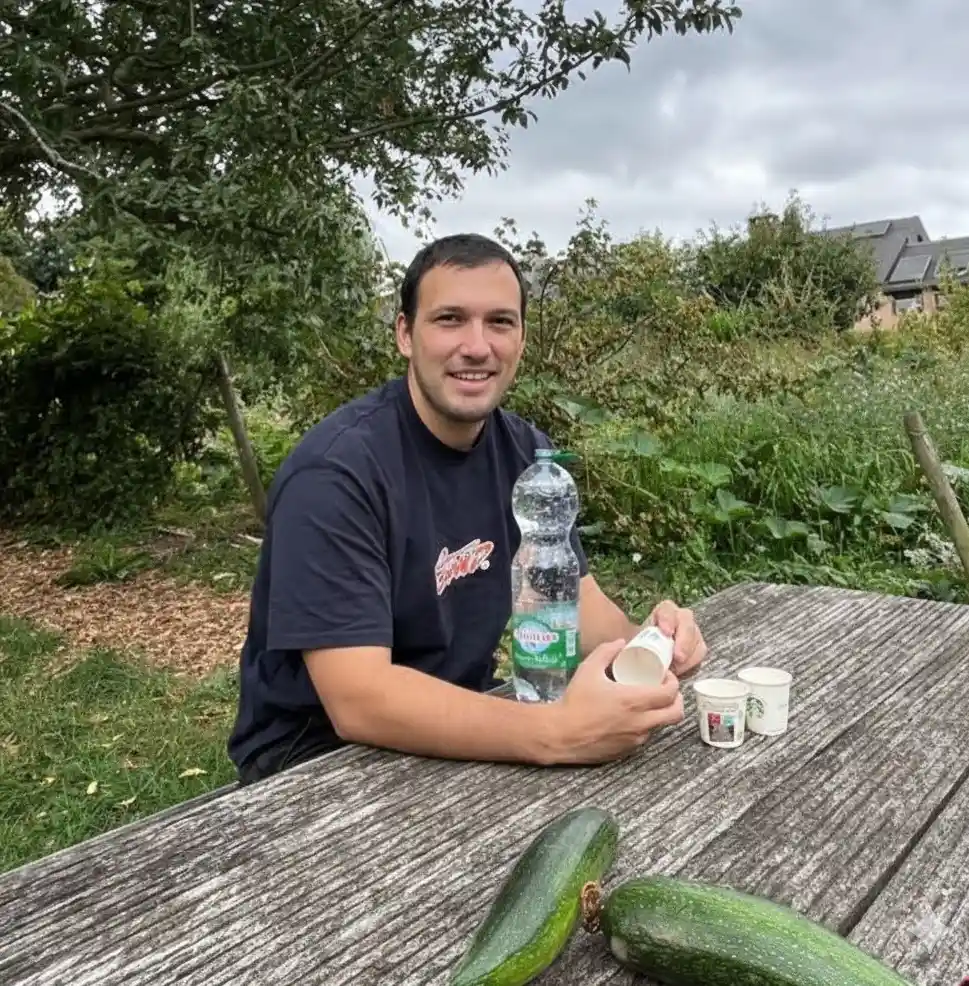
I'm Lucas Rivero Iribarne.
Agricultural Engineer turned Data Engineer. My goal: develop data-driven solutions to confront incoming global change impacts using geographic information systems, remote sensing, scripting, in situ sensors, data science and Big Data techniques.
I studied agricultural engineering, motivated by learning how plant species work and how they are affected by climate change. Since then, I have been involved in many projects related to both agricultural and natural systems, first doing my bachelor's thesis using remote sensing tools and water balance modelling to compute crop coefficients in avocado plantations, and then as a research assistant in projects related to watershed hydrology, monitoring ecosystems that are being modulated both by climate change impacts and human impacts.
In 2022, I relocated to the Netherlands to do a Master's in Geo-Information Science at Wageningen University. There, I deepened my expertise in physical and statistical modelling of agro and ecosystems.
Currently, I live in Utrecht with my partner Emi. When I'm away from the keyboard, you can find me bouldering, practicing yoga, or learning French.
Technical Ecosystem
Programming
I used R for Remote Sensing applications and in situ sensors data processing. Now I use Python for everything, from building data pipelines to orchestration and data processing.


Backend & Cloud
To keep the backend running I have used Postgres, Google Cloud Platform, and Docker. Not an expert yet, but getting there.


GIS & Remote Sensing
I have been using geospatial data since my bachelor onwards, from spectral indices, time series, and processing weather and satellite data and to spatialize ecohyodological and crop growth models models. Now I would be able to handle larger amounts of data with the Data Engineering knowledge!


In-situ Monitoring
Sensor calibration, deployment, and monitoring in diverse ecosystems (rain gauges, soil moisture, water level sensors, soil pits, leaf area index). Biomass field surveys. Leading field campaigns.


Ecohydrological Modeling
I have used water flow models to simulate water and carbon balance at different scales, such as soil profile level (HYDRUS 1D), field level (SWAP and WOFOST), hydrological catchment (SWAT+) and regional level (WOFOST/Remote Sensing/GIS).


Frontend
Basic knowledge. Built this site with Svelte (with AI help).

Languages
Global communication.


